
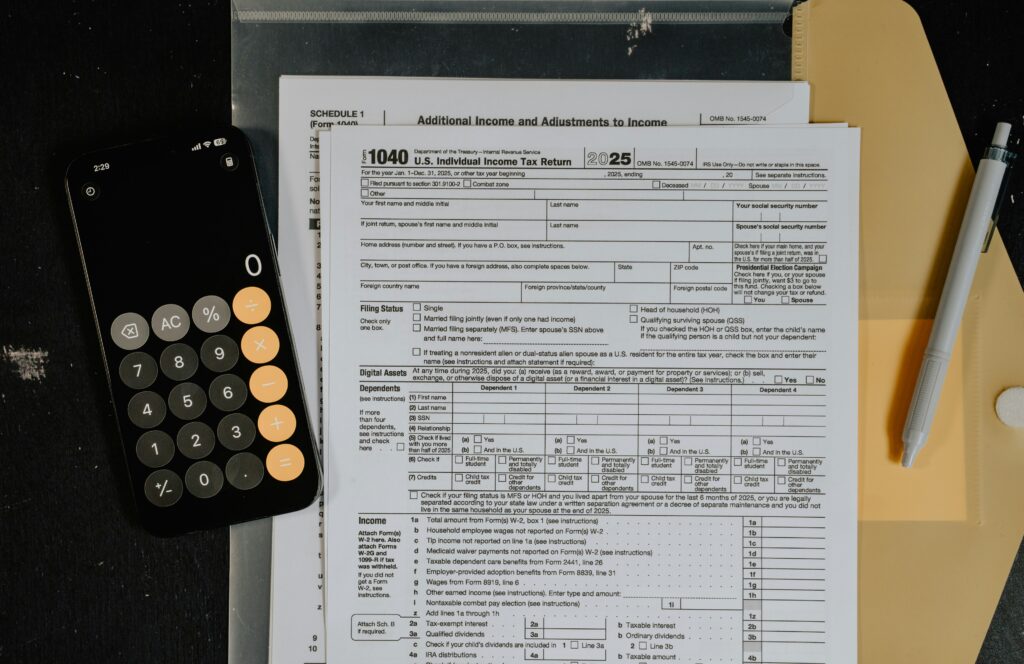
If you manage a real estate fund, K-1 season is probably one of the most stressful times of the year. Your investors are waiting. Their CPAs are emailing you. And every day your K-1s are late, you lose a little bit of credibility.
We work with fund managers who range from launching their first fund to running multiple vehicles with dozens of investors. The number one complaint we hear from LPs? “I got my K-1 late, and I didn’t understand half of what was on it.”
That’s a problem you can fix. Here’s how K-1 preparation actually works at the fund level, what goes wrong, and what you can do to get it right.
What a K-1 Reports (And Why It Matters More Than You Think)
Every real estate fund structured as a partnership or LLC has to file Form 1065 with the IRS and issue a Schedule K-1 to each investor. The K-1 reports each investor’s share of the fund’s income, losses, deductions, and credits for the tax year.
For real estate funds specifically, K-1s tend to include:
- Ordinary income or loss from fund operations
- Rental income or loss from underlying properties
- Capital gains from property sales or refinancing events
- Depreciation deductions (including bonus depreciation and cost segregation benefits)
- Interest expense allocations
- State-level income for each state where the fund owns property
- Each investor’s beginning and ending capital account balance
This is not just a compliance document. Your K-1 tells investors how their investment affected their personal tax return. If the numbers are wrong, incomplete, or confusing, it creates real problems for your LPs and their CPAs.
The Timeline: When K-1s Are Due and Why Most Funds Miss It
For calendar-year partnerships, the federal deadline to file Form 1065 and issue K-1s is March 15 (March 16 in 2026 since the 15th falls on a Sunday). Most funds file a six-month extension, which pushes the deadline to September 15.
Here’s the reality: the majority of real estate funds file on extension. That’s not necessarily a bad thing. Complex fund structures, multi-state investments, and cost segregation studies take time to finalize. Filing a clean, accurate K-1 in September is better than rushing out a sloppy one in March.
But here’s what separates a professional operation from a frustrating one:
- Set expectations early. Tell your investors in Q4 whether you plan to deliver K-1s by March or September. No one likes surprises.
- Provide draft K-1s if you file on extension. This gives your LPs enough information to estimate their tax liability and avoid underpayment penalties.
- Communicate proactively. A simple email in February that says “Here’s our K-1 timeline and what to expect” goes a long way.
We’ve seen fund managers lose investors not because of poor returns, but because of poor communication around tax reporting. Don’t let that be you.
What Goes Into Preparing a Fund-Level K-1
K-1 preparation for a real estate fund is not the same as preparing a K-1 for a simple two-person LLC. Here’s what’s actually involved:
Closing the Books
Before you can prepare K-1s, your fund’s books need to be closed for the year. That means:
- All property-level income and expenses are reconciled
- Depreciation schedules are finalized (including any cost segregation adjustments)
- Capital account balances are updated for contributions, distributions, and income/loss allocations
- Intercompany transactions between the fund and its subsidiaries are eliminated
If your monthly accounting for real estate funds is clean and up to date, this step goes smoothly. If it’s not, this is where the delays start.
Allocating Income and Loss to Investors
This is where it gets tricky. Real estate funds don’t just split income 50/50. Most funds have allocation provisions in their operating agreement that dictate how income, losses, and deductions flow to each partner. These provisions typically follow the fund’s distribution waterfall.
Common allocation issues we see:
- Preferred return accruals that need to be tracked and allocated properly
- Promote or carried interest allocations to the GP once performance hurdles are met
- Special allocations for depreciation or tax credits that differ from economic allocations
- Varying ownership percentages when new investors come in at different closings
If your operating agreement says one thing and your allocation spreadsheet does another, you’ve got a problem. Your CPA needs to read the operating agreement closely and build the allocation model to match.
Multi-State Tax Reporting
If your fund owns property in more than one state, each investor may need to file tax returns in every state where the fund earns income. That means you’re not just issuing one federal K-1 per investor. You may be issuing state K-1 equivalents for every state in your portfolio.
Say your fund owns properties in Texas, Georgia, and California. Texas has no state income tax, so no state K-1 is needed there. But Georgia and California both require state-level reporting. Your California investors who thought they were only investing in out-of-state real estate may be surprised to learn they owe taxes in Georgia too.
This is a common source of frustration for LPs. Get ahead of it by flagging multi-state filing requirements in your investor communications.
Reconciling to the Financial Statements
Your K-1 allocations need to tie back to your fund’s financial statements. If your balance sheet shows one capital account balance and the K-1 shows another, that’s a red flag for any investor doing due diligence.
We reconcile tax-basis capital accounts to GAAP or book capital accounts for every fund we work with. The two will almost always differ (depreciation timing is the biggest reason), but you should be able to explain the difference clearly.
Common K-1 Mistakes That Hurt Your Fund’s Credibility
We’ve reviewed K-1 packages from other firms and inherited funds where the prior CPA made errors. Here are the most common ones:
- Incorrect depreciation allocations. Bonus depreciation or cost segregation benefits get allocated to the wrong partners, or the amounts don’t match the depreciation schedule.
- Missing state K-1s. The fund files federal K-1s but forgets (or doesn’t realize) that state-level reporting is required.
- Capital account errors. Beginning balances don’t match the prior year’s ending balances. This happens more often than you’d think, especially when funds switch CPAs.
- Wrong partner information. Investor names, TINs, or ownership percentages are incorrect. Small errors here cause big headaches for LPs trying to file.
- Late delivery with no communication. The K-1s arrive in August with no prior warning. Investors are already upset before they even open the envelope.
Every one of these mistakes is preventable with the right processes in place.
How to Make K-1 Season Less Painful
If you want to set up your fund’s back office for smooth K-1 delivery, here’s what we recommend:
Keep Your Books Clean Year-Round
K-1 preparation starts long before tax season. If you’re scrambling to close your books in February, you’re already behind. Monthly accounting that’s reconciled and reviewed gives you a head start.
Work With a CPA Who Knows Fund Accounting
A generalist CPA can prepare a K-1 for a simple partnership. But real estate fund K-1s involve waterfall allocations, multi-entity structures, cost segregation, and multi-state reporting. You need someone who does this regularly.
Build a K-1 Timeline and Communicate It
Create a timeline that includes:
- When books will be closed
- When the tax return will be filed (or extended)
- When draft K-1s will be available
- When final K-1s will be delivered
Share this timeline with your investors in January. Then follow up with status updates. This kind of transparency builds trust, even if the K-1s aren’t delivered until September.
Use an Investor Portal
Delivering K-1s by email or (worse) mail is slow and insecure. An investor portal lets you upload K-1 packages, notify investors, and track who has downloaded their documents. It also gives your LPs a single place to access current and prior-year K-1s.
If you’re building professional-grade financials for your fund, K-1 delivery should be part of that infrastructure.
Review Before You Send
This sounds obvious, but review every K-1 before it goes out. Check partner names, TINs, capital account balances, and allocation amounts against the tax return. A second set of eyes catches errors that save you from amended K-1s later.
K-1s Are a Reflection of How You Run Your Fund
Your K-1 package is one of the few tangible things your investors receive from you each year. A clean, on-time, well-organized K-1 tells your LPs that you take the financial side of the business seriously. A late, error-filled one tells them the opposite.
If you’re a GP raising capital for your next fund, remember that sophisticated LPs will ask about your K-1 track record. “When did your investors get their K-1s last year?” is a real question that comes up in due diligence. Have a good answer.
Need help getting your fund’s K-1 process dialed in? Reach out to us and we’ll walk you through what a clean K-1 process looks like.